Newsroom

Powering Fashion Week Logistics
The Challenge
During Paris Fashion Week, pieces need moving continuously between the atelier, photo studios and celebrity dressing locations across the city, often on an hour's notice, for a shoot or dressing call that cannot slip. A standard same-day courier cannot commit to a slot precise enough for a studio's schedule.
The Solution
Stracker runs a dedicated moto-courier network booking fixed 15-minute delivery slots instead of a same-day window.
- Each delivery is booked into a specific 15-minute slot aligned to the receiving location's schedule.
- Riders are briefed on handling requirements so fragile or unpacked pieces arrive shoot-ready.
- Live tracking lets the coordinator confirm ETA without calling the driver.
The Result
120+ runs / 15-min More than 120 point-to-point runs across a single Fashion Week, on-time on every run, with no buffer time built into shoot schedules.

Real-Time Supply Chain Visibility with Stracker360
Supply chain visibility is the ability to see, in real time, where every shipment is and what's happening to it, and 89% of organizations now call supply-chain disruption the number one risk to their growth (Capgemini, 2023). Yet most freight still moves blind. You get an email when it ships, another when it lands, and silence in between.
That silence is the real problem. Ask any operations manager what frustrates them, and it's rarely speed. It's the waiting, the three carrier portals, the moment a shipment "should have arrived" and nobody can say where it is. In our experience, that gap is where good relationships quietly break. So here's how real-time freight visibility closes it, and why it changes what a logistics partner is actually for.
Key takeaways
- 89% of firms call supply-chain disruption their top growth risk, and 43% are increasing tech and visibility spend to counter it (Capgemini, 2023).
- A month-long disruption hits the average supply chain every 3.7 years; over a decade, shocks can erase roughly 45% of one year's EBITDA (McKinsey).
- You can't act on what you can't see, so fragmented, carrier-by-carrier tracking is a strategic weakness, not just an inconvenience.
- Real-time visibility shifts the conversation from "where is my shipment" to "how do we make the network resilient."
What is real-time supply chain visibility?
Real-time freight visibility is a single, live view of every shipment across every carrier, updated as events happen rather than after the fact. It matters because visibility now ranks as the top strategic investment priority in logistics, with 43% of firms increasing that spend (Capgemini, 2023).
The key word is real-time. Knowing where a shipment was yesterday tells you nothing useful when a customs hold lands today. A proper freight tracking platform consolidates air, road, and specialized charter movements into one consistent picture. As a result, you stop stitching updates together from separate systems and start seeing the whole flow at once.
Why does supply chain visibility matter now?
Disruption is no longer the exception. A month-long supply-chain disruption now hits the average company every 3.7 years, and over a decade those shocks can wipe out roughly 45% of a single year's EBITDA (McKinsey). Because those numbers are structural, visibility stops being a nice-to-have.

Here's the uncomfortable logic. You can't act on what you can't see. When 89% of firms name disruption their top risk yet still track freight carrier by carrier, the blind spot itself becomes the exposure. However, the cost of a blind spot rarely shows on an invoice. It shows up as a missed deadline, a spoiled shipment, or a client who stops trusting the estimate.
For example, a delay you spot at hour one is a routing decision. The same delay discovered on arrival is a crisis. Meanwhile, the shipments where this hurts most are exactly the ones that can't be redone.
Citation capsule: A month-long supply-chain disruption strikes the average company every 3.7 years, and over a decade such shocks can erase around 45% of one year's EBITDA (McKinsey Global Institute), which is why 43% of firms are raising visibility and technology spend (Capgemini, 2023).
How does traditional freight visibility fall short?
Most freight forwarding still runs on a model built decades ago, and it leaves visibility to chance. The forwarder books capacity, hands the shipment to one or more carriers, and you see whatever those carriers choose to share, when they choose to share it. With 89% of firms calling disruption their top risk (Capgemini, 2023), that's a fragile way to operate.
For a single shipment, that might mean checking two or three separate systems. Each has its own update cadence, its own terminology, its own blind spots. Now multiply that across dozens of shipments in different verticals and countries. The fragmentation compounds fast.
The result isn't just inconvenience. It's an inability to act early, because nobody sees a problem until it has already become a delay. In short, traditional visibility tells you what went wrong. It rarely tells you in time to fix it.
Why fragmented tracking is a strategic weakness
We've found that scattered tracking doesn't just slow people down. It quietly lowers expectations. Teams stop asking "where is it exactly" because the honest answer is "we'll know when it lands." That resignation is the real cost, and it's invisible until something breaks.
What does a real-time freight visibility platform actually do?
A modern freight visibility software layer replaces guesswork with one live view, and demand for exactly this capability is why 43% of firms are increasing supply-chain technology spend (Capgemini, 2023). Stracker360 was built to give clients one place to see everything, instead of many places to guess.
- Real-time tracking across shipments and carriers, consolidated into one consistent view rather than scattered across each transporter's own system.
- Centralized multi-carrier visibility, so a client managing air, road, and charter movements for the same collection or the same event isn't switching systems to piece together the full picture.
- Proactive alerting, flagging disruptions, delays, or customs holds as they emerge, so clients can react before a problem becomes a missed deadline instead of after.
Why security sits inside the product
Behind the interface, Stracker360 runs on secure cloud infrastructure with embedded AI, built to meet GDPR requirements from the ground up. GDPR is the EU regulation governing personal data since 2018, and it sets a baseline for security of processing. This isn't the exciting part of the story, but it matters. In industries moving export-controlled aerospace parts, unreleased luxury collections, or confidential deeptech prototypes, data security isn't optional. It's part of the product.
How does visibility turn a forwarder into a strategic partner?
This is the heart of what changes. A traditional forwarder is reactive by design: it moves what it's told to move and reports back when asked. Real-time visibility rewrites that relationship, which is why supply-chain technology now ranks as the number one investment priority for logistics leaders (Capgemini, 2023).
When a client can see their flows in real time, spot patterns across shipments, and get ahead of disruption, the conversation changes. It moves from "where is my shipment" to "how do we make the whole network more resilient." That shift, from executor to partner, is the whole point.
There's a business logic underneath it too. Freight forwarding generates the operational revenue that keeps the business running day to day. Meanwhile, the platform builds the recurring value, and the switching costs, that make a relationship stick. Service revenue funds the operations. The platform layer is what turns a one-off vendor into a long-term partner.
Citation capsule: Supply-chain technology and visibility now rank as the top strategic investment priority in logistics, with 43% of firms raising that spend and 89% naming disruption their number one growth risk (Capgemini, 2023), the pressure that pushes forwarders from execution toward partnership.
Where does real-time visibility matter most in critical freight?
Visibility matters everywhere, but it matters most exactly where the stakes are highest and a shipment can't be redone. With disruption striking the average supply chain every 3.7 years (McKinsey), the critical-freight cases are where blind spots turn expensive fastest.
- Aerospace. In an aircraft-on-ground event, every hour a plane sits grounded costs tens of thousands. Knowing the moment a reroute or customs hold hits lets the airline decide instead of wait.
- Cold chain. For temperature-sensitive medtech shipments, continuous monitoring means a drift outside range is known immediately, not discovered on arrival when it's already too late.
- Cross-border luxury. Our Zen duty-paid service runs on the same platform, so a house selling VAT-free can track clearance proactively and keep the customer experience clean.
In every one of these cases, the question isn't just "will it arrive." It's "will we know the moment something goes wrong." A real-time freight tracking platform is built to answer that before it needs to be asked.
Frequently asked questions
What is supply chain visibility?
Supply chain visibility is the ability to track shipments and inventory in real time across every carrier and stage. It matters because 89% of firms now call disruption their top growth risk (Capgemini, 2023), and you can't act early on a problem you can't see coming.
Why is real-time freight visibility important?
Because disruption is structural, not rare. A month-long disruption hits the average supply chain every 3.7 years, and over a decade shocks can erase roughly 45% of one year's EBITDA (McKinsey). Real-time visibility lets teams reroute early instead of discovering delays on arrival.
How is a freight visibility platform different from carrier tracking?
Carrier tracking shows one carrier's data on one carrier's system, on its own schedule. A freight visibility platform consolidates air, road, and charter movements into a single live view, with proactive alerts. That's why 43% of firms are raising supply-chain technology spend (Capgemini, 2023).
Is shipment data secure on a visibility platform?
It should be. Stracker360 runs on secure cloud infrastructure built to meet GDPR requirements, the EU regulation governing personal data since 2018. For export-controlled parts, unreleased collections, or confidential prototypes, security of processing is part of the product, not an afterthought.
Stracker360 is the technology layer behind every shipment we manage, giving clients across aerospace, luxury, and deeptech real-time control over their most critical freight. See how Stracker360 works.

Wandercraft
The Challenge
Wandercraft ships exoskeletons and lithium-ion battery packs, classified as dangerous goods, to hospitals and demo sites across Europe and the US. Transport costs and forwarder commission were bundled into one opaque line, with no lever to optimize one without moving the other.
The Solution
Stracker's SmartBudget model splits every invoice into transport cost and Stracker service fee from the outset.
- Every quote itemizes carrier rate separately from Stracker's fee, giving finance a true cost baseline.
- Dangerous-goods handling is built into the standard workflow.
- For time-critical shipments, Stracker pre-clears DG paperwork for the fastest compliant routing.
The Result
-15% in one quarter Transport budget dropped 15% within a single quarter of moving to SmartBudget, with no change in service level.

Fashion Week Logistics: How Runway Collections Move
Fashion logistics runs on a customs document most people never see: the ATA Carnet, and roughly 200,000 of them move more than $25 billion in goods across borders every year (USCIB, 2024). Four times a year, the fashion world moves in sync. New York, London, Milan, Paris: the calendar repeats, season after season, and with it comes one of the most demanding challenges in luxury.
Nothing about Fashion Week tolerates delay. A look that doesn't arrive on time isn't late; it simply doesn't exist for that show. In our experience, the paperwork and the security plan decide the outcome long before the truck reaches the venue. So here's what actually moves between these capitals, and what it takes to get it there intact, on time, and unseen until the moment it's meant to be seen. Want the wider picture first? Start with our air freight guide for luxury.
Key takeaways
- About 200,000 ATA Carnets move more than $25 billion in goods across borders each year (USCIB), and fashion week logistics leans on them heavily.
- The circuit is fixed: New York, then London, Milan and Paris, twice yearly, working backward from a deadline that never moves.
- Runway looks are often the only copy that exists, so confidentiality and security are operational requirements, not PR extras.
- US cargo theft hit a record in 2024, up 27 percent, with the average loss now above $202,000 (CargoNet).
Why does the fashion week calendar leave zero margin?
The Fashion Week circuit follows a fixed rhythm: New York first, then London, Milan and Paris in the weeks that follow, twice a year for spring/summer and fall/winter (CFDA, 2026). Every house on that calendar works backward from a date that will not move. The show starts when it starts.
That single constraint, an immovable deadline, changes everything about how these shipments get planned. There's no next available slot, only the moment the first model steps out. Because the four cities run back to back, a delay in one capital cascades into the next. As a result, houses can't treat each show as a separate job. It's one continuous relay across borders, and the baton is a collection worth a fortune. New York's fashion industry alone supports more than $24 billion in annual wages, a sense of the value riding on that calendar (NY Governor's Office, 2024).
What actually travels between the capitals?
Fashion week logistics is not just finished garments. A single collection generates a complex web of movements, and each category carries its own mix of fragility, declared value and secrecy. For example, a tissue-thin sample dress and a heavy staging element need completely different handling, yet both have to arrive on the same day.
- Prototypes and samples, often shuttling between the atelier and the design team for last-minute adjustments right up until showtime.
- Runway looks, frequently the only physical copy of a design that exists. Any damage or loss is effectively irreplaceable before the show.
- Accessories and hardware, from shoes to jewelry, often sourced from different countries and needing to converge at one location at one moment.
- Set and scenography materials, which can be as demanding as the garments, especially for houses known for elaborate staging.
Because most of this converges from several countries, timing beats speed. We've found that the hard part isn't moving any one item fast; it's making everything land together. Meanwhile, the value-to-weight ratio stays extreme, which is exactly why couture flies rather than sails.
What is an ATA Carnet, and why does fashion depend on it?
Most of what appears on a runway is never sold, imported or exported in the ordinary sense. It's on loan, moving temporarily from a workshop to a show and back. That's where the carnet comes in. The ATA Carnet is an international customs document that allows samples, prototypes and professional equipment to cross roughly 80 countries duty-free and tax-free, provided the goods are re-exported within a year (ICC; trade.gov).
The scale explains why it matters. Around 200,000 ATA Carnets are issued worldwide each year, covering more than $25 billion in temporarily imported goods (USCIB, 2024). For a house showing in four capitals in four weeks, correct carnet handling isn't a technicality. It's what keeps the whole circuit financially viable.

Get it wrong, and duties get paid on goods that were never meant to be sold in that country. Get it right, and the entire multi-city movement stays clean, fast and cost-efficient. The carnet is essentially a passport for goods: one document, a running list of items, and a customs guarantee that they'll leave again. In our experience, a carnet error rarely stops a shipment outright; it just parks it at a border on the one day the calendar can't spare. For sales that do cross a border for good, the logic is different: that's the world of DDP and VAT-free delivery, where duties are paid, not deferred.
Is confidentiality really a logistics problem?
Yes, and the numbers back it up. US cargo theft hit a record in 2024, climbing 27 percent year over year, with the average loss now above $202,000 per incident (CargoNet via Carrier Management, 2025). For unreleased couture, the exposure isn't only financial. A leaked look loses the surprise the whole show was built around.
Runway looks stay confidential until the exact moment they walk. So shipments can't just be fast; they have to be discreet. Declared values are often extremely high, which brings insurance and security considerations most freight never touches: unmarked packaging, a controlled chain of custody, and tightly limited visibility into what's inside until the house is ready to reveal it. Because a single runway piece can be irreplaceable, security here is a design requirement, not an add-on. That's a different calculus from ordinary luxury goods logistics, where the item can usually be reordered.
How does Stracker orchestrate fashion week logistics?
Coordinating this flow means running several things at once across multiple countries: temporary customs documentation, high-value insurance, tight security, and a delivery window measured in hours. About 200,000 carnets move worldwide each year (USCIB, 2024), and the ones on a show calendar leave no room to redo the paperwork.
This is where a multi-country network and a hands-on approach matter most. We don't just book transport; we sequence it. The samples leaving Paris on Monday, the accessories arriving from Italy on Tuesday, and the staging shipped from a third country all have to converge exactly where and when they're needed, with customs cleared before the truck reaches the venue.
- Carnet discipline, so temporary imports stay duty-free and re-export deadlines are met across every capital on the circuit.
- High-value security handling, from unmarked packaging to controlled custody, built for shipments that can't be reordered.
- Real-time visibility through Stracker360, so a house sees a delay or a customs hold the moment it appears, not after the show slot has passed.
Fashion Week runs on creativity and precision in equal measure. Ours is the precision that makes sure the creativity gets seen.
Frequently asked questions
What is an ATA Carnet used for in fashion?
An ATA Carnet lets a house move samples, runway looks and equipment across borders duty-free and tax-free, as long as the goods return within a year. It covers roughly 80 countries, which is why it fits a four-city show circuit so well (ICC).
Why can't fashion houses just ship couture by sea?
Ocean transit runs weeks, and Fashion Week works to a fixed date that never moves. Couture also carries an extreme value-to-weight ratio, so air freight cost is marginal against the piece's value. Speed and security outweigh the freight saving. See our air freight guide for the full math.
How big is the security risk for runway shipments?
Significant. US cargo theft set a record in 2024, up 27 percent, with average losses above $202,000 per incident (CargoNet). For unreleased collections, the reputational cost of a leak can exceed the financial one, so discretion is built into the shipment.
What happens if an ATA Carnet is filled out incorrectly?
Customs can hold the goods or charge duties on items that were only on loan. On a show calendar, even a short hold can mean a look misses its slot. Correct carnet handling keeps the multi-city movement clean, fast and cost-efficient.
Stracker supports luxury houses including Schiaparelli, Jean Paul Gaultier, Margiela, Balenciaga and Saint Laurent with time-critical logistics across fashion's biggest moments. Talk to our luxury team.

Air Cairo
The Challenge
An AOG event is a race against the clock. Before Stracker, Air Cairo's AOG desk had to identify a local handling agent per origin country and wait for a rate confirmation, routinely pushing pickup past the same day in 41% of cases outside Western Europe or the Gulf.
The Solution
Stracker replaced this ad hoc network with a single point of contact and a pre-cleared carrier footprint spanning more than 80 countries.
- Any request triggers pickup within a 2-hour guaranteed window, including OBC, charter and NFO options selected automatically.
- A full transport solution (routing, flight, AWB) is returned in under 2 hours.
- Real-time GPS and milestone tracking is pushed directly into Stracker360.
The Result
< 2h → J+1 From confirmed pickup anywhere in the 80+ country network to landed delivery in Cairo the next day.
A Parisian Haute Couture Maison
The Challenge
The Maison's Paris flagship regularly sells to international clients who want their purchase duty-free and are departing within hours or days, forcing a choice between the client carrying a large box through security, or a manual, paperwork-heavy export process boutique staff had neither the time nor customs expertise to manage.
The Solution
With Stracker's Passenger Assistance offer, the boutique hands the finished piece to Stracker directly post purchase; Stracker collects it, prepares and clears the export documentation, and delivers it duty-free, customs-cleared, directly to the client at the airport.
- Boutique staff are removed from the customs process entirely.
- The piece is delivered via a white-glove hand-off at the departure terminal.
- Clients receive live status in the Stracker360 app from boutique hand-off to airport delivery.
The Result
< 8h boutique-to-gate delivery time. Passenger Assistance shipments average under 8 hours in Paris, letting the Maison confirm same-day duty-free delivery at the point of sale, a differentiator in closing high-value international sales.

Ethiopian Airlines
The Challenge
Sourcing European and US-origin parts to Addis Ababa traditionally routed through third-party freight forwarders and interline cargo agreements, adding intermediary cost that scaled with volume rather than shrinking with it.
The Solution
Stracker books available cargo capacity directly on Ethiopian Airlines' own ET-operated flights instead of a third-party freight service.
- Parts move as belly cargo on scheduled ET flights, removing a layer of interline freight cost.
- Stracker coordinates directly with origin handling agents in Europe and the US.
- Shipment visibility runs through Stracker360 end-to-end.
The Result
-22% cost/shipment Routing onto Ethiopian's own ET flights cut per-shipment freight cost by 22% while maintaining delivery timelines to ADD.
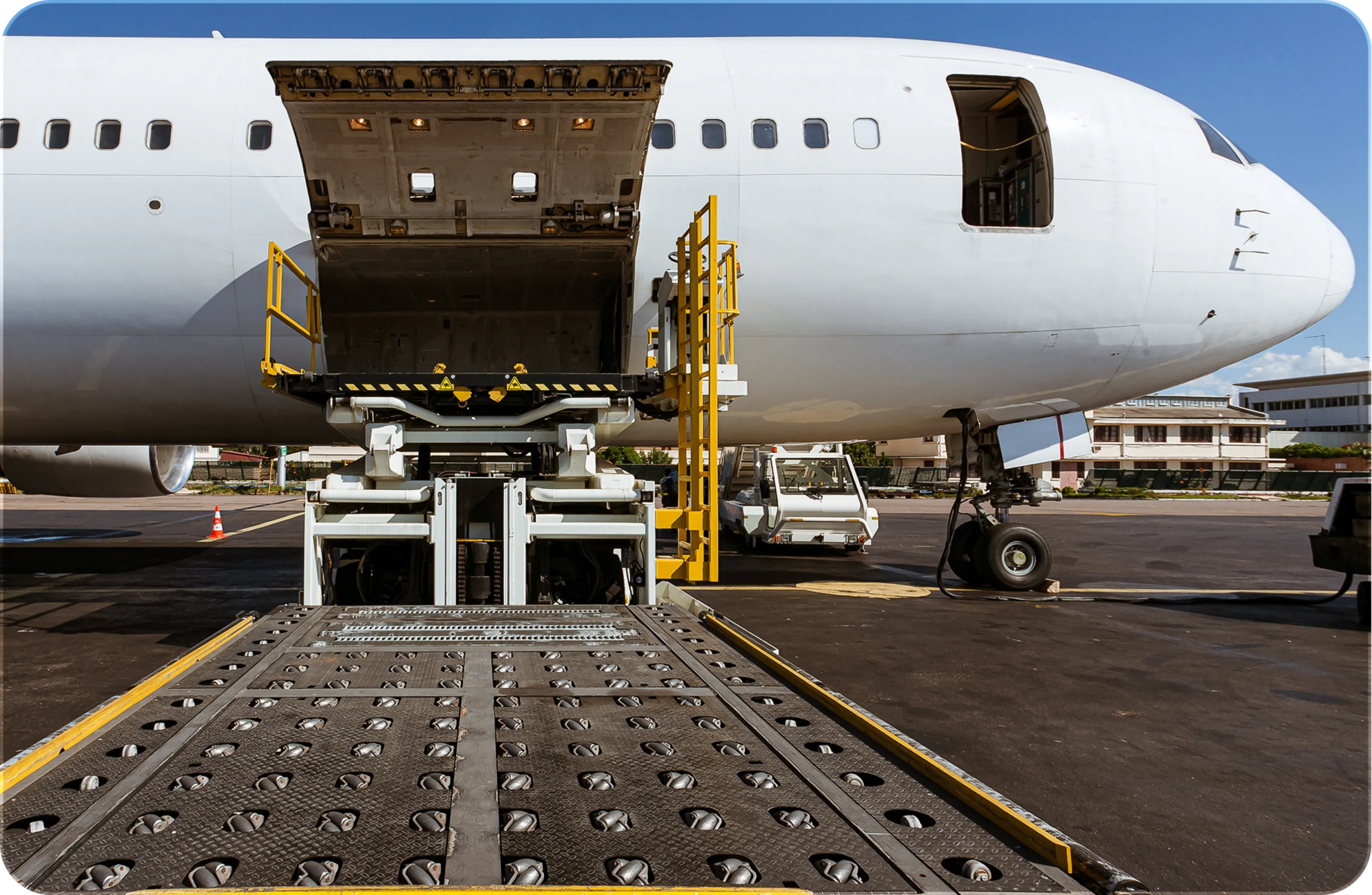
Avion Express
The Challenge
A leased aircraft can be positioned anywhere in the world on any given day, and a logistics delay disrupts a lessee's own schedule. Ops Control had no single logistics partner able to respond consistently regardless of aircraft position.
The Solution
Stracker acts as Avion Express's global logistics layer, with a standing SLA on how fast a request is acknowledged and actioned wherever the aircraft is positioned.
- Every request is picked up and actioned within a 15-minute SLA, independent of location or time zone.
- A single Stracker point of contact coordinates local handling agents.
- Status on every open request is visible in Stracker360.
The Result
< 15 min SLA Ops Control receives action on a logistics request within 15 minutes on average, regardless of the aircraft's position globally.
Afrijet Fly Gabon
The Challenge
Procurement, maintenance and supply teams spent a disproportionate share of the week chasing shipment status across separate email threads, phone calls and manual customs cross-checks, making it hard to spot a part at risk of arriving late.
The Solution
Stracker now sources 100% of Afrijet's aircraft parts, every shipment tracked on a single Stracker360 workspace shared by procurement, maintenance and supply.
- All purchase, transport and customs documentation is centralized and updated live.
- Maintenance planning references the same live ETA feed procurement sees.
- A dedicated CSM monitors the pipeline proactively, flagging at-risk shipments.
The Result
2.5x / -90% A 2.5x gain in effective productivity on parts-related tasks and a 90% reduction in email/phone exchanges per shipment, zero AOG events attributable to parts logistics since consolidating.

A Global Luxury Group
The Challenge
Order-givers across the Group's houses coordinated urgent London replenishment through fragmented channels, separate quotes, threads and tracking per shipment, per Maison, per carrier, with urgent stock moves defaulting to expensive case-by-case air freight.
The Solution
Stracker built a bespoke Stracker360 solution: order-givers across every Maison raise a request, get an instant price, and manage all communication in one place, served by a dedicated nightly shuttle consolidating parcels from every brand.
- Any order-giver creates a request and sees the price instantly, all communication centralized.
- A dedicated nightly shuttle consolidates parcels from every Maison into one Paris-London movement.
- A 15-minute response SLA backs every urgent request.
The Result
98.9% OTD / -14% Urgent next-day deliveries hit 98.9% on-time across several hundred shipments. Consolidating onto a nightly road shuttle cut transport budget by 14%.

Air Freight vs Sea Freight for Luxury Goods
In the air freight vs sea freight decision, luxury keeps choosing the sky, even though air cargo spot rates hit roughly $3.34 per kg in April 2026, up 30 percent year over year and the highest since October 2022 (Supply Chain Dive, 2026). That looks like a reason to switch to ocean. For luxury goods, it isn't. The freight bill was never the constraint.
Air freight is getting more expensive, and nobody in the industry disputes it. Fuel spikes, war-risk surcharges, and hub congestion all push the air freight cost curve up. However, in our experience, the houses shipping the most valuable cargo rarely blink. So here's why the economics of air freight for luxury goods hold, even as rates climb.
Key takeaways
Why is air freight getting more expensive?
Air freight cost is climbing for structural reasons, not a temporary blip. In 2026, disruption around the Strait of Hormuz pushed jet fuel to roughly double, and carriers added fuel surcharges of up to 55 cents per kg on affected lanes (Supply Chain Dive, 2026). For most industries, that forces a hard speed-versus-budget trade-off.
Three pressures stack up. Fuel prices swing with geopolitics. Insurance and war-risk surcharges now apply to more routes than they did a few years ago. Meanwhile, congestion at major hub airports adds friction and, indirectly, cost. Because these forces are structural, they aren't going away. As a result, the sensible question isn't whether air is pricier. It's whether luxury has a cheaper option that actually works.
Why can't luxury just switch to sea freight?
In the air freight vs sea freight comparison, transit time is the dealbreaker for luxury. Ocean freight takes 20 to 45 days door to door, against just 1 to 5 days by air (Freightos, 2026). For a collection built on being current, weeks at sea aren't a saving. They're a missed season.
Value-to-weight ratio is the value of an item divided by how much it weighs. Luxury sits at the extreme end. Three factors make the switch to ocean far riskier than it looks.

That security point isn't abstract. BSI and TT Club found that 41 percent of cargo thefts occur while goods are in transit, with "strategic" theft on the rise (TT Club, 2025). In short, speed is itself a security feature. Fewer days in transit means fewer chances for something to go wrong.
What does air freight actually cost as a share of a luxury item?
This is the number most people get wrong, so let's do the arithmetic instead of quoting a stat. At roughly $3.34 per kg (Supply Chain Dive, 2026), flying a one-kilogram luxury item costs a few dollars. If that item sells for several thousand euros, the freight is a fraction of one percent of the sale price.
Walk it through. A one-kilo handbag worth 4,000 euros ships for a handful of dollars at spot rate. Even after the 55-cent surcharge and handling, you're deep in rounding-error territory. Compare that to low-value consumer goods, where freight can eat a real slice of the retail price. For luxury, the ratio is so lopsided that rate hikes barely register.
Global personal luxury goods were worth around 363 billion euros, and that value concentrates in small, light items (Bain, 2024). So luxury isn't paying a premium to fly. It's paying a rounding error in exchange for speed, security, and reliability that ocean can't match at any price. Rising surcharges nudge that rounding error. They don't touch the underlying math.
How can luxury shippers cut air freight cost without switching?
The smart response to a rising air freight cost isn't changing modes. It's optimizing within air. We've found that disciplined routing and planning recover more margin than a mode switch ever could, without giving up the 1-to-5-day transit that makes air freight for luxury goods work in the first place (Freightos, 2026).
Three levers do most of the work.
None of this means ignoring cost. It means managing it where the leverage actually is. For example, the same planning discipline that protects a couture drop also protects a temperature-sensitive medtech load. The principles carry across verticals, including air freight for pharma and cold-chain shipments.
How Stracker moves high-value air freight
For luxury cargo, a forwarder's judgment matters as much as raw capacity. Air freight vs sea freight isn't really a cost question for these clients. It's a reliability question, and reliability comes from network, documentation, and visibility working together. In our experience, three things make the difference.
Air freight costs will keep rising. That's a trend, not a blip. But for luxury, air isn't a cost center to cut. It's a strategic input to manage well.
Frequently asked questions
Is air freight or sea freight better for luxury goods?
Air freight is better for luxury goods. Ocean transit runs 20 to 45 days versus 1 to 5 days by air (Freightos, 2026), and luxury's high value-to-weight ratio means freight is a fraction of a percent of the sale price. Speed and security outweigh the saving.
How much does air freight cost per kilogram in 2026?
Air cargo spot rates reached about $3.34 per kg in April 2026, up 30 percent year over year and the highest since October 2022 (Supply Chain Dive/Xeneta, 2026). Fuel surcharges of up to 55 cents per kg were added on lanes affected by 2026 Strait of Hormuz disruption.
Why is air freight so expensive right now?
Air freight cost is driven up by fuel price volatility, war-risk and insurance surcharges on more routes, and hub congestion. In 2026, disruption near the Strait of Hormuz pushed jet fuel to roughly double, adding carrier surcharges of up to 55 cents per kg (Supply Chain Dive, 2026).
Does faster transit reduce cargo theft risk?
Yes. BSI and TT Club found that 41 percent of cargo thefts occur while goods are in transit, with strategic theft rising (TT Club, 2025). Shorter transit means fewer days and fewer handoffs exposed to theft, tampering, or counterfeit substitution, so air freight's speed is itself a security feature.
Stracker specializes in critical, time-sensitive freight for aerospace, luxury, and deeptech across 80+ countries. Our luxury desk balances cost, speed, and security on high-value air freight for the houses that can't afford delay. Talk to our luxury team.

Cold Chain Logistics for Deeptech & Medtech Shipments
Temperature excursions cost the biopharma industry roughly $35 billion every year, according to IQVIA (IQVIA via Tive). That single number explains why cold chain logistics runs by stricter rules than almost any other freight. Some shipments are urgent because a deadline is fixed. Others are urgent because a life depends on them, or because what's inside the box is years of R&D that can't be replaced if it's damaged, exposed, or warmed by a few degrees.
Deeptech and medtech freight lives in that second category, where "sensitive" means something far more literal. In our experience, the transport leg is rarely the hard part; it's holding a temperature band and a clean chain of custody across every handoff. So here's what makes these shipments different, and what it actually takes to move them safely.
Key takeaways
What makes a cold chain shipment ultra-sensitive?
Three factors combine to raise the stakes, and the biggest is temperature: a single excursion helps drive the roughly $35 billion in annual biopharma losses IQVIA attributes to broken cold chains (IQVIA via Veratrak). Because so much value rides on a narrow band, environmental control isn't a feature. It's the whole job.
The cold chain is the unbroken sequence of temperature-controlled storage and transport that keeps a product within its required range from origin to destination. Break it once and the shipment can be unusable, even if it arrives on time and physically intact. Three pressures typically stack up:
What temperature bands does cold chain logistics have to hold?
Most biologics move in one of two bands set by global health bodies: +2 to +8C for freeze-sensitive products, and -15 to -25C for frozen ones, per WHO and PAHO cold chain guidance (PAHO). Certain reagents sit commonly around -20C. As a result, cold chain logistics isn't one standard; it's a set of bands, each with its own packaging and monitoring plan.

The band drives everything downstream. For example, a +2 to +8C vaccine and a -20C reagent need different qualified packaging, different coolant, and different dwell-time math. We've found that most excursions don't happen in flight; they happen during handoffs, tarmac waits, and customs holds, when a validated box quietly runs out of thermal runway. In short, holding the band is a whole-journey discipline, not a departure-gate checkbox.
How do IATA DGR shape temperature controlled shipping?
Many cold chain shipments are also dangerous goods, which adds a second rulebook on top of the temperature one. IATA DGR are the Dangerous Goods Regulations governing how hazardous items move by air, including lithium batteries, chemical reagents, and biological substances, with packaging, labeling, and handling set by hazard class (IATA).
Because a monitored shipment often carries a lithium battery in its data logger, and the payload itself may be a Class 6.2 biological substance, the DGR rules apply to more temperature controlled shipping than shippers expect. However, the logic mirrors the airworthiness paperwork that governs aerospace parts: get the documentation and packaging right, and the shipment moves. Get it wrong, and a compliant, correctly chilled box can still be refused at acceptance. The same time-critical discipline that keeps AOG spare parts moving applies here, just aimed at temperature instead of tail numbers.
When do deeptech shipments trigger export controls?
Deeptech freight adds a third layer that pure medtech usually doesn't: dual-use export controls. In the EU, Regulation (EU) 2021/821 governs dual-use items, meaning goods with both civilian and potential military or strategic applications, and can require a license before a prototype crosses a border (European Commission). Meanwhile, the temperature clock keeps ticking regardless of paperwork.
This is the same regulatory logic that governs ITAR-controlled aerospace components, applied to a different industry. For example, a sensor, an optics module, or an advanced material bound for a test site abroad may need classification and licensing before it can legally ship. Because those checks take time, and cold chain shipments can't wait, the export file has to be prepared in parallel with the thermal plan, not after it. Otherwise a fully validated shipment sits at a border while its coolant expires.
What does moving cold chain freight safely actually take?
Handling these flows well means treating every stage as a control point, which matters in a market Mordor Intelligence sizes at roughly $383 billion in 2026, growing to about $516 billion by 2031 (Mordor Intelligence, 2026). Scale like that reflects how much industry now depends on holding a temperature band end to end.
Two use cases show the range. A deeptech prototype moving from a lab to a test site needs a controlled chain of custody, shock and vibration protection, and confidentiality about what's inside and where it's going. An urgent medical device flips the priority toward speed and cold chain integrity, because a sample tied to a scheduled procedure has no room for delay. Both, though, run on the same core practices:
Deeptech and medtech logistics might look very different from aerospace or luxury flows. In practice, they demand the same underlying discipline: understand exactly what makes a shipment sensitive, build the plan around that sensitivity, and keep visibility throughout so nothing gets discovered too late to fix. That's a natural extension of what critical-freight work has always required.
Frequently asked questions
What is cold chain logistics?
Cold chain logistics is the temperature-controlled handling, storage, and transport of products that must stay within a set range end to end. WHO and PAHO guidance uses +2 to +8C for freeze-sensitive biologics and -15 to -25C for frozen products, held without a single break.
How much do temperature excursions cost the industry?
IQVIA estimates temperature excursions cost the biopharma sector around $35 billion a year. A single break in the cold chain can render a shipment unusable, even when it arrives on time and looks physically intact, which is why continuous monitoring is treated as essential rather than optional.
Do cold chain shipments fall under IATA dangerous goods rules?
Often, yes. IATA DGR govern lithium batteries in data loggers, chemical reagents, and biological substances moving by air, with packaging and labeling set by hazard class. Because many monitored medtech shipments include at least one of these, the DGR rules apply more often than shippers expect.
Why do deeptech prototypes need export licenses?
Deeptech items with both civilian and strategic uses can be dual-use goods. In the EU, Regulation 2021/821 can require a license before such items cross a border. Because classification takes time and cold chain shipments can't wait, the export file should be prepared alongside the thermal plan.
Stracker specializes in critical, time-sensitive freight for aerospace, luxury, and deeptech across 80+ countries. Our deeptech and medtech desk builds each plan around the specific sensitivity of the shipment, from cold chain integrity to export-control compliance. Talk to our cold chain team.

Nouvelair
The Challenge
Moving parts from storage at CDG to Nouvelair's base at Monastir previously depended on the Ops team's own judgment on routing and timing, made case by case under time pressure rather than on data.
The Solution
Stracker builds each CDG-MIR transport plan using its context-to-data engine, weighing historical transport performance on the route against current conditions.
- Every plan draws on the history of comparable prior shipments plus live external data.
- A confirmed transport plan is returned within 30 minutes of a request.
- A dedicated CSM supervises execution and flags exceptions.
The Result
< 30 min / on-time Transport plans confirmed within 30 minutes of request, with consistent on-time delivery since moving to data-driven planning.

An Avant-Garde Fashion House
The Challenge
Dressing celebrities for a major film festival means moving an entire collection, often 40+ garments plus accessories, from the Paris atelier to a hotel suite in Cannes, arriving pressed and in exact running order. A standard cargo van or courier risks creased garments, mixed-up looks, and no controlled chain of custody.
The Solution
Stracker transports the full collection in a secured truck fitted with a garment rail system, so pieces travel hanging, not folded, with a single continuous chain of custody door-to-door.
- Garments travel on in-truck rails in the running order stylists need them in.
- The truck is secured and temperature-controlled for the roughly 900 km Paris-Cannes route, with live GPS tracking.
- Delivery is scheduled directly to the hotel suite door.
The Result
40+ looks / 0 creases The full festival wardrobe arrived hanging, in sequence and crease-free, with zero garments requiring a pre-carpet steam or repair call.

DDP Shipping: Sell VAT-Free Without Surprising Buyers
DDP shipping is the delivery model where the seller, not the customer, pays every import duty and tax before the parcel arrives, and it matters because unexpected costs are the single biggest reason online shoppers abandon a purchase, cited by 39% of them (Baymard Institute, 2025). Selling VAT-free sounds like a growth lever. In practice, it often becomes a customer experience risk.
A client places an order, the checkout looks clean, and then a courier shows up asking for an unexpected customs fee before handing over the box. That single moment can undo months of brand building. So here's how delivered duty paid works, why it protects a luxury purchase, and how Stracker's Zen offer was built around it.
Key takeaways
- Unexpected costs drive 39% of checkout abandonments, the #1 reason shoppers walk away (Baymard, 2025).
- DDP (delivered duty paid) makes the seller the importer of record, so the customer pays nothing on arrival.
- Under DAP or DDU, the buyer clears customs and gets billed at the door, often through an unfamiliar portal.
- 58% of cross-border shoppers have been hit by surprise customs charges, and 75% then reconsider the retailer (Avalara, 2024).
- For luxury, DDP is a brand-protection decision, not just an operational one.
What is DDP shipping, and why does it matter?
DDP (delivered duty paid) is the Incoterm where the seller takes on all responsibility, cost, and risk until the goods reach the buyer, including import clearance, duties, and VAT (ICC Incoterms 2020). As a result, the customer receives their order exactly as they would a domestic purchase: one price, no follow-up invoice.
That matters because tax-free selling doesn't make tax disappear. When a house sells VAT-free to international customers, the duty and tax obligations don't vanish. Instead, they simply move downstream to the delivery moment, unless someone plans for them upfront. DDP shipping is how you plan for them.
In our experience, this is the detail luxury teams underestimate most. The pricing sheet looks competitive, the checkout feels premium, and then the last hundred meters of the journey break the whole experience. Because the fee lands after the sale, it rarely shows up in a marketing review, yet it shows up in reviews and return rates.
Why do surprise fees kill cross-border sales?
Surprise costs are the number one checkout killer. Baymard Institute found that unexpected extra costs, such as shipping, tax, and fees, cause 39% of non-browsing cart abandonments, ahead of slow delivery at 21% and forced account creation at 19% (Baymard Institute, 2025). For cross-border orders, the customs fee is exactly that unexpected cost, just delayed to the doorstep.

The damage doesn't stop at checkout. A shopper who clears the cart still faces a second surprise on arrival. However, that second surprise is worse, because they've already committed emotionally to the purchase. Then a courier asks for money before releasing the box.
Rhetorical question worth sitting with: what does a luxury customer remember, the silk packaging or the 90 euro invoice at the door? For example, a first-time international buyer who pays an unexpected duty rarely blames the tax authority. Instead, they blame the brand. Meanwhile, that hesitation follows them into the next purchase decision.
What do surprise customs fees actually cost a brand?
The reputational cost is measurable. In a survey of 8,242 consumers, Avalara found that 58% of cross-border shoppers had been hit by surprise customs charges, 75% said they would reconsider buying from that retailer again, and roughly 50% had refused delivery of a parcel outright (Avalara, 2024). Those aren't small leaks.

Refused parcels are the quiet disaster. When a customer rejects the fee, the item has to travel back internationally. Because of how customs works, duties can be charged again on the return leg, and the house often ends up absorbing both the shipping and the tax. So one broken delivery can cost far more than the margin on the sale.
We've found that the returns math is where finance teams finally pay attention. A surprise fee doesn't just risk one order. It risks the return shipping, the double duty exposure, the restocking, and a customer who now hesitates before ever ordering across a border again. In short, the cheapest customs experience is the one the buyer never sees.
DDP vs DAP (and DDU): who pays at the border?
The difference between DDP and DAP is the difference between a smooth delivery and a broken one. Under DAP (delivered at place), the successor to the older DDU term, the buyer becomes the importer of record and gets billed for duties and taxes on arrival. Under DDP, the seller has already settled everything (ICC Incoterms 2020).
Put plainly, DDP vs DDU comes down to one question: who gets the surprise? With DAP or DDU, it's the customer, often through an unfamiliar courier portal, sometimes days after checkout. With DDP shipping, nobody gets a surprise, because the charges were handled before the parcel ever moved toward the door.
For a luxury brand, that choice is a brand-protection decision. DDP keeps the unboxing experience the customer paid for intact, instead of letting a customs invoice be the first thing they touch.
How does Stracker's Zen offer deliver DDP end to end?
Zen was built to make the customs experience invisible. The core promise is simple to state and hard to execute: the house sells VAT-free, and the customer never has to think about customs at all. Because global B2C e-commerce is forecast to reach roughly $5.5 trillion by 2027 (US Department of Commerce), the cross-border experience is only getting more competitive.
To keep that promise, Stracker takes on the parts of the journey that usually go wrong:
- Duty and VAT calculation. We work out the correct exposure for each destination country before the parcel ships, not after.
- DDP structuring. Every shipment moves under delivered duty paid terms, so all charges are settled upfront rather than billed at the door.
- Proactive clearance. Customs is handled ahead of arrival, so parcels don't sit in bonded warehouses waiting on payment or paperwork.
- A domestic-feeling delivery. To the customer, it looks like a local purchase: one price, no separate payment request, no wait.
Zen runs on our real-time visibility platform, Stracker360, so the house can see each cross-border flow as it moves. For houses that also ship time-critical pieces between shows, the same discipline underpins our Fashion Week logistics and ATA Carnet handling.
Frequently asked questions
What does DDP mean in shipping?
DDP stands for "delivered duty paid." It's the Incoterm where the seller pays all import duties, taxes, and clearance costs, so the buyer receives the goods with nothing left to pay. It's the model that lets a brand sell VAT-free without surprising the customer at delivery.
What is the difference between DDP and DDU?
Under DDP the seller is the importer of record and settles all duties and taxes upfront. Under DDU, now replaced by DAP in Incoterms 2020, the buyer clears customs and is billed on arrival. In short, DDP hides the border from the customer; DDU exposes it.
How do surprise customs fees affect sales?
They're costly. Unexpected extra costs cause 39% of cart abandonments (Baymard, 2025), and among cross-border shoppers hit by surprise customs charges, 75% reconsider the retailer and around 50% refuse delivery (Avalara, 2024). DDP shipping removes that risk by settling charges before arrival.
Can luxury brands sell VAT-free and still use DDP?
Yes. Selling VAT-free at checkout and shipping DDP work together. The house sets a clean, tax-free price, and the logistics partner calculates and pre-pays the destination duties and VAT under delivered duty paid terms, so the customer's experience stays identical to a domestic order.
Stracker specializes in critical, time-sensitive freight for aerospace, luxury, and deeptech across 80+ countries. Our Zen offer handles DDP shipping end to end, so luxury houses can sell VAT-free while the customer never sees a customs fee. Explore the Zen offer.

Reev
The Challenge
Before Reev's charging hardware can be sold in the US, working prototypes have to reach an accredited certification lab. As a startup, Reev could not afford a prototype sitting in customs, with previous ad hoc courier arrangements offering no visibility once a shipment left French soil.
The Solution
Stracker manages Reev's prototype shipments as time-critical technical freight from pickup in France to hand-off at the US lab, with customs documentation prepared in advance.
- HTS classification and commercial documentation are prepared and checked before the shipment moves.
- A single Stracker contact tracks the shipment end-to-end.
- Live tracking in Stracker360 lets Reev confirm delivery to the lab without chasing status.
The Result
3 business days The most recent prototype shipment cleared US customs and reached the certification lab in 3 business days door-to-door, versus an unpredictable multi-week window previously.

A Heritage Paris Fashion House
The Challenge
Dressing dozens of guests for a single red-carpet event means dozens of parallel shipments converging on New York within the same 24 hours, each requiring its own proforma invoice and HTS classification. A single wrong code or undervalued proforma is enough to hold a look in customs on the one day it cannot be late.
The Solution
Stracker's AI documentation-check module screens every proforma invoice and HTS code before departure, with a single live dashboard tracking all New York-bound shipments.
- Each proforma is validated against product classification rules before departure.
- 45 or more shipments tracked on one Stracker360 view rather than 45 separate carrier references.
- Customs clearance status updates in real time.
The Result
45+ / same day More than 45 shipments tracked and cleared into New York within a single event-day window, every shipment reaching the styling team on schedule.

Aircraft on Ground (AOG): How Spare Parts Move Fast
Aircraft on ground (AOG) is the status a plane gets when it can't fly because a part is missing, and Boeing has estimated that situation can cost from $10,000 to as much as $150,000 per hour, depending on the aircraft type and route (Boeing figure).
That single number explains why AOG logistics runs by different rules. There's no next available slot. There's only now.
AOG is where aerospace logistics gets tested in real time. In our experience, the part itself is often sourced within hours; it's the paperwork and the border that decide the outcome. So here's what actually happens when a part needs to move fast, and why geopolitical instability turns an already tense process into a fragile one.
Key takeaways
- A grounded commercial aircraft can cost $10,000 to $150,000 per hour (Boeing), so AOG shipments are treated as a live crisis, not a booking.
- Most delay happens on the ground, in sourcing and customs, not in the air.
- Airworthiness paperwork (EASA Form 1, FAA 8130-3) and export controls (ITAR/EAR) can make an on-site part unusable without the right documents.
- Airspace closures since 2022 have forced reroutes that add hours and cost to the fastest lanes.
Why does every minute count?
A grounded aircraft is not a parked asset. It's a running cost center. Add up lease payments, crew standby, passenger rebooking, delayed cargo, and the knock-on disruption to the schedule, and the meter runs fast. For example, one worked case put a three-day A320 AOG event at roughly $79,440 in combined lease, labor, and parts cost (eWAY Aviation, 2023). As a result, an AOG request never joins a normal queue.

In short, the clock is the client, and every handoff gets measured against it.
What does an AOG flow actually look like?
A typical AOG shipment moves through four tightly compressed stages, and the slowest one decides how long the plane stays grounded
- The alert. An airline or MRO (maintenance, repair and overhaul) provider identifies a faulty or missing part grounding an aircraft. The clock starts immediately.
- Sourcing the part. The part may sit in the airline's own stock elsewhere, with a parts broker, or at a manufacturer's warehouse on another continent. Speed of sourcing is often the single biggest variable in the whole event.
- Expedited transport. Once located, the part moves by the fastest route available, usually a next-flight-out booking on a scheduled carrier, sometimes a dedicated charter when minutes matter more than cost.
- Priority customs and last mile. The part still has to clear customs and reach the hangar. This is where many AOG shipments quietly lose time, not in the air, but on the ground, waiting on paperwork.
The paperwork that can ground a part anyway
Aircraft parts are not ordinary cargo, and two documentation layers shape almost every AOG shipment. Get either wrong and a part can be physically on-site yet legally unusable.
- Traceability certification. Parts travel with an EASA Form 1 or an FAA Form 8130-3, Authorized Release Certificates confirming that a component conforms to approved design data and is airworthy. No valid tag, no installation.
- Export controls. US-origin parts can trigger US export rules: ITAR for defense-listed components, and the Export Administration Regulations (EAR, administered by the Commerce Department) for most civil aircraft parts (US Munitions List). Either can add screening, documentation, and restrictions on who may receive a part.
These rules exist for good reason. They also add friction, and friction becomes dangerous the moment a geopolitical shock lands on top of it.
Where a geopolitical crisis breaks the chain
An AOG flow that normally takes hours can stretch into days when the operating environment shifts underneath it. None of these risks are hypothetical.
- Airspace closes. Russian airspace has been closed to dozens of countries since 2022, and conflict-zone or NOTAM restrictions can force full reroutes. Europe-to-Asia cargo now runs two to four hours longer on affected lanes, with rates reported up 10 to 25 percent (The Flying Engineer, 2026).
- Sanctions shift overnight. A part cleared for export yesterday may need new licensing today if a country or entity is added to a restricted list.
- Customs tightens. Heightened security or a new tariff regime at a border can turn a routine clearance into a multi-day hold, exactly when a plane can't afford to wait.
How Stracker keeps AOG flows moving
In an AOG event, a forwarder's network and judgment matter as much as raw transport capacity. In our experience, three things make the difference
- An 80+ country network, so a crisis reroute rarely starts from zero. The relationships, customs contacts, and local execution are already in place where they're needed.
- Priority customs handling, built on documentation discipline that keeps ITAR-sensitive and traceability-critical parts moving instead of stuck in a queue.
- Real-time visibility through Stracker360, so when conditions change mid-flow, the airline and MRO know immediately and can decide, rather than wait for a phone call.
When speed is the whole point, the right air freight routing and a cleared customs file waiting at the hangar are what separate a few hours of downtime from a few days.
Frequently asked questions
What does AOG mean in aviation?
AOG stands for "aircraft on ground." It signals that a plane cannot fly because it needs a part or repair, and that the situation is urgent enough to justify the fastest possible sourcing and transport, including dedicated charters when necessary.
How much does an AOG event cost per hour?
Boeing has estimated that a grounded commercial aircraft can cost between $10,000 and $150,000 per hour, depending on the aircraft type and route, once lease, crew, rebooking, and schedule disruption are included.
Why do AOG parts get delayed at customs?
Aircraft parts need airworthiness certificates (EASA Form 1 or FAA 8130-3) and may fall under export controls such as ITAR or the EAR. Missing or incorrect documentation is a common reason a part sits at a border even after it has physically arrived.
What is the difference between AOG and MRO logistics?
MRO logistics covers planned maintenance, repair, and overhaul flows on predictable schedules. AOG logistics is the emergency subset: an unplanned grounding where speed of sourcing and transport is the priority above almost everything else.
Stracker specializes in critical, time-sensitive freight for aerospace, luxury, and deeptech across 80+ countries. Our aerospace desk handles AOG and MRO logistics for clients who cannot afford delay. Talk to our AOG team.

Dassault Falcon Services
The Challenge
A VIP-operated Falcon jet cannot absorb an unplanned delay: an unexpected stock-out threatens a committed departure, often with only hours of notice.
The Solution
Stracker maintains a 24/7 emergency sourcing desk dedicated to Dassault Falcon Services, locating, purchasing and delivering a replacement part to wherever the aircraft is positioned.
- An emergency request is actioned immediately regardless of time of day, with sourcing, transport and customs run in parallel.
- OBC and charter options are available by default for stock-out situations.
- Every movement is tracked live in Stracker360.
The Result
24/7/365 100% dispatch reliability on VIP departures affected by an emergency stock-out since engaging Stracker's dedicated desk.

A Parisian Couture House
The Challenge
The House stages trunk shows recreating its boutique experience city by city, Mumbai, Dubai, Miami, New York, Hong Kong, each needing ready-to-wear, one-of-a-kind couture, furniture, display fixtures and mannequins. Moving that through separate customs regimes, with high-value couture that must be re-exported intact, is a coordination problem a standard forwarder treats as several unrelated bookings.
The Solution
Stracker moves each pop-up as a single coordinated consignment with temporary-admission customs handling so high-value pieces clear inbound and back out cleanly at every stop.
- The full boutique travels as one managed consignment per city rather than disconnected bookings.
- Temporary-admission and ATA Carnet handling is prepared for each jurisdiction on the tour.
- Every leg is tracked live in Stracker360 under a single point of contact.
The Result
6 cities / turnkey pop-up boutiques delivered across six cities, each city's full contents arriving as one cleared consignment ready to install, with every high-value piece re-exported intact to the next stop.

Air Sénégal - Customs Regime
The Challenge
Parts sent to Air Sénégal's MRO at Paris CDG were delivered under bonded customs status by the prior forwarder rather than T1 transit, generating recurring late-redelivery penalties absorbed into transport spend unflagged.
The Solution
Stracker identified the mismatch and switched every CDG-bound shipment to T1 transit clearance handled city-side.
- Every shipment now clears under T1 transit by default.
- Documentation is prepared in advance against the MRO's specific receiving requirements.
- Penalty exposure is tracked shipment by shipment in Stracker360.
The Result
-17% budget Eliminating the mismatch removed late-redelivery penalties, cutting overall transport budget by 17% with no change to the parts or MRO relationship.

A Paris Luxury Maison
The Challenge
When a top client in Los Angeles needs a piece before an event, the Maison is committing to a delivery window a standard next-flight-out service cannot guarantee, since missing the flight's loading cut-off in Paris and a slow customs release in LA are the two failure points a forwarder normally does not control directly.
The Solution
Stracker runs the Paris to Los Angeles corridor as a supervised, milestone-by-milestone operation, taking direct control of loading in Paris and clearance in LA.
- Pickup in Paris from 8:00 pm; customs-cleared overnight with loading supervised for a 99.5% proven loading guarantee, making the 10:30 am Air France flight.
- Customs in LA is pre-cleared before landing; priority release around 5:00 pm, ahead of the standard cargo queue.
- Final white-glove delivery reaches Beverly Hills the same evening, with every milestone notified live.
The Result
< 24h / 99.5% door-to-door across an ocean and a customs border, backed by a 99.5% proven loading guarantee and live, personalized milestone notifications throughout.
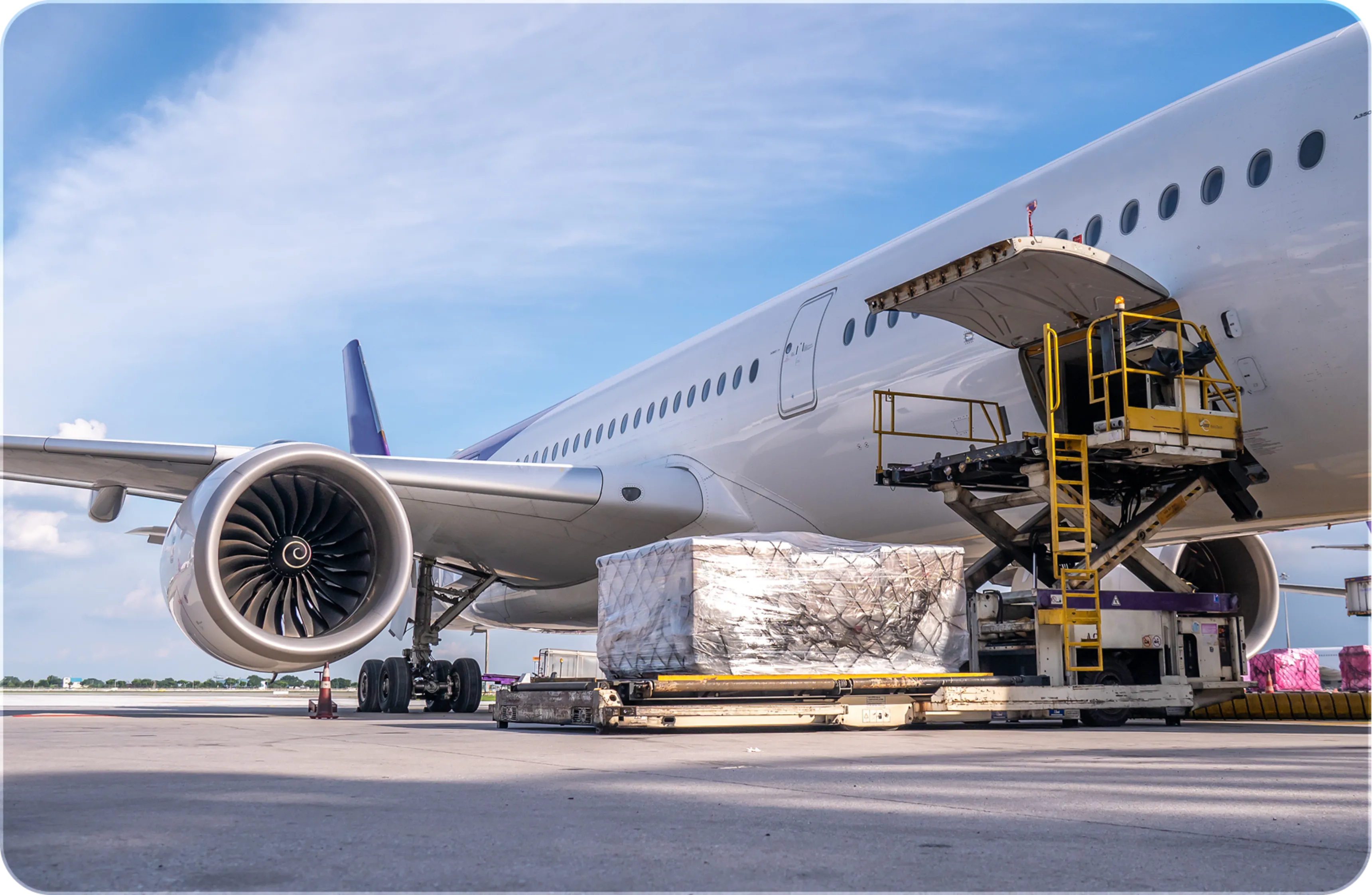
Air Sénégal - ATR Spares
The Challenge
Ordering a spare part from ATR previously meant leaving the maintenance system entirely, raising a request by email, waiting for a quote, and chasing status through a separate channel.
The Solution
Stracker integrated directly into Air Sénégal's maintenance and inventory system, so ordering and tracking both happen inside the tool engineers already use.
- A part request raised in the maintenance system triggers order and pickup automatically.
- Order status, customs clearance and delivery ETA sync back into the same system in real time.
- Recurring ATR references are pre-cleared for customs.
The Result
0 emails / J+1 ATR spare parts ordered with zero email exchanged with Stracker, from request to next-day delivery in Dakar.