Keep your aircraft off the ground
Aerospace & Defense
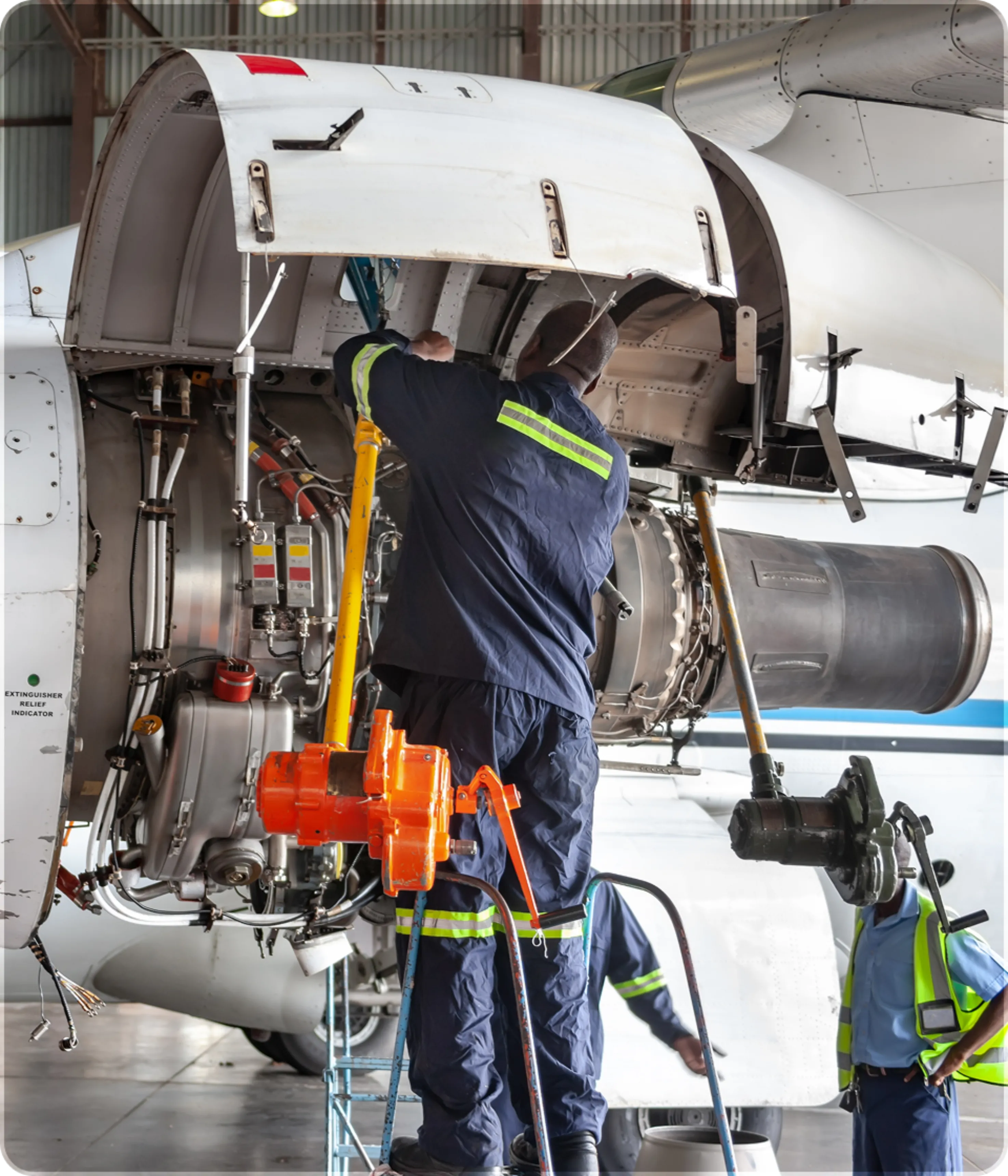
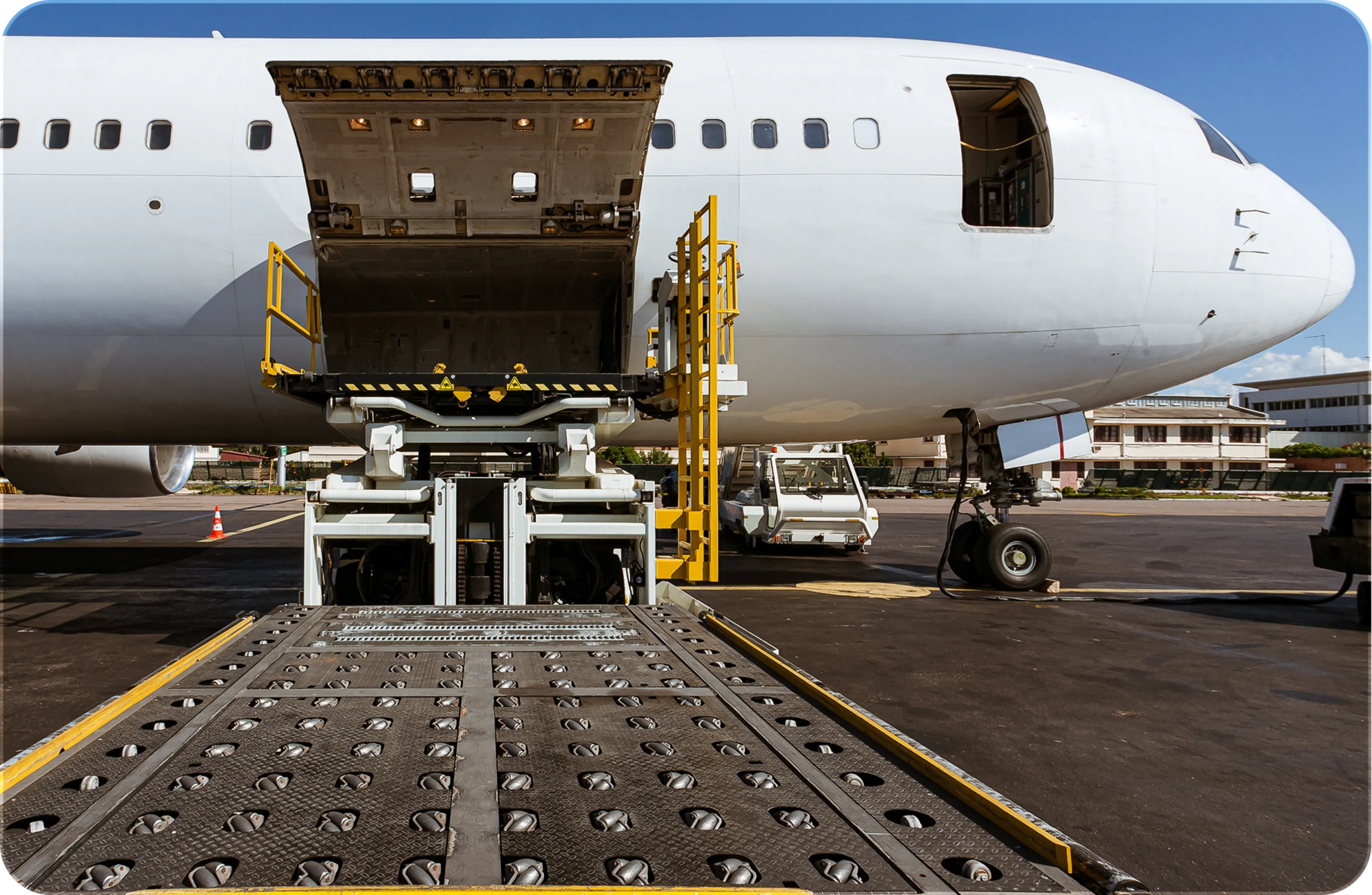
We move critical aircraft parts, engines, and equipment. Fast, tracked, and cleared. Wherever your AOG happens.
A grounded aircraft costs up to €150,000 an hour in cancellations, losses, and compensation. A missing part shouldn't be the reason it stays on the tarmac.
What we move
Prototypes
Early, irreplaceable builds moved against the clock.
(01)

Robotics & systems
Tailored transport solutions for oversized, high-value cargo.
(02)

Sensitive components
Fragile, high-value parts with careful, controlled handling.
(03)

Lab & test equipment
Critical instruments delivered ready to run.
(04)

We build the plan and move the moment you're ready.
Sensitive and fragile cargo, treated with the care it demands.
The invoice matches the real cost. No commission, no markup, ever.
Explore our case studies
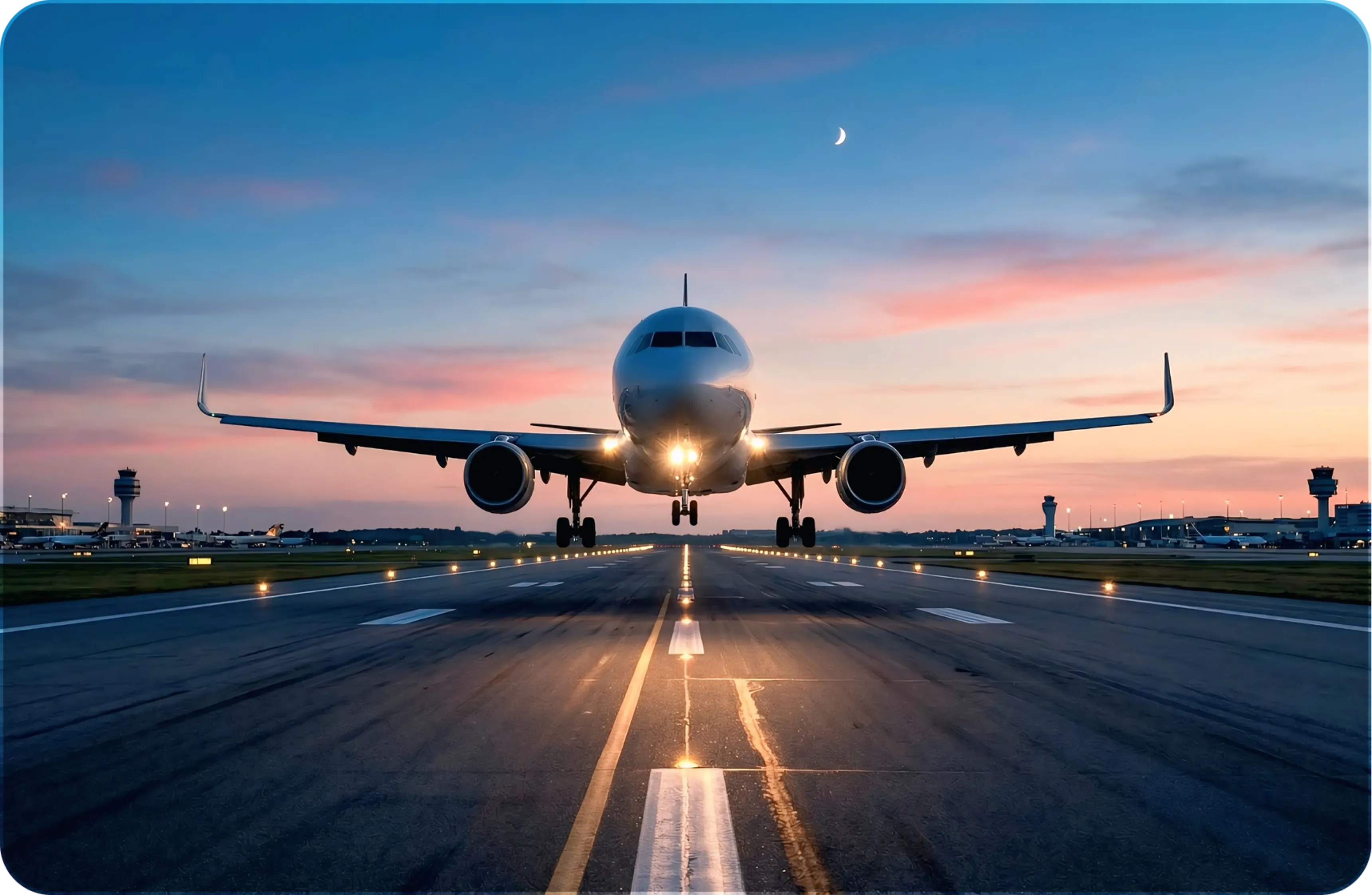
Aircraft on Ground (AOG): How Spare Parts Move Fast
Aircraft on ground (AOG) is the status a plane gets when it can't fly because a part is missing, and Boeing has estimated that situation can cost from $10,000 to as much as $150,000 per hour, depending on the aircraft type and route (Boeing figure). That single number explains why AOG logistics runs by different rules. There's no next available slot. There's only now.
AOG is where aerospace logistics gets tested in real time. In our experience, the part itself is often sourced within hours; it's the paperwork and the border that decide the outcome. So here's what actually happens when a part needs to move fast, and why geopolitical instability turns an already tense process into a fragile one.
Key takeaways
- A grounded commercial aircraft can cost $10,000 to $150,000 per hour (Boeing), so AOG shipments are treated as a live crisis, not a booking.
- Most delay happens on the ground, in sourcing and customs, not in the air.
- Airworthiness paperwork (EASA Form 1, FAA 8130-3) and export controls (ITAR/EAR) can make an on-site part unusable without the right documents.
- Airspace closures since 2022 have forced reroutes that add hours and cost to the fastest lanes.
Why does every minute count?
A grounded aircraft is not a parked asset. It's a running cost center. Add up lease payments, crew standby, passenger rebooking, delayed cargo, and the knock-on disruption to the schedule, and the meter runs fast. For example, one worked case put a three-day A320 AOG event at roughly $79,440 in combined lease, labor, and parts cost (eWAY Aviation, 2023). As a result, an AOG request never joins a normal queue.
In short, the clock is the client, and every handoff gets measured against it.
What does an AOG flow actually look like?
A typical AOG shipment moves through four tightly compressed stages, and the slowest one decides how long the plane stays grounded
- The alert. An airline or MRO (maintenance, repair and overhaul) provider identifies a faulty or missing part grounding an aircraft. The clock starts immediately.
- Sourcing the part. The part may sit in the airline's own stock elsewhere, with a parts broker, or at a manufacturer's warehouse on another continent. Speed of sourcing is often the single biggest variable in the whole event.
- Expedited transport. Once located, the part moves by the fastest route available, usually a next-flight-out booking on a scheduled carrier, sometimes a dedicated charter when minutes matter more than cost.
- Priority customs and last mile. The part still has to clear customs and reach the hangar. This is where many AOG shipments quietly lose time, not in the air, but on the ground, waiting on paperwork.
The paperwork that can ground a part anyway
Aircraft parts are not ordinary cargo, and two documentation layers shape almost every AOG shipment. Get either wrong and a part can be physically on-site yet legally unusable.
- Traceability certification. Parts travel with an EASA Form 1 or an FAA Form 8130-3, Authorized Release Certificates confirming that a component conforms to approved design data and is airworthy. No valid tag, no installation.
- Export controls. US-origin parts can trigger US export rules: ITAR for defense-listed components, and the Export Administration Regulations (EAR, administered by the Commerce Department) for most civil aircraft parts (US Munitions List). Either can add screening, documentation, and restrictions on who may receive a part.
These rules exist for good reason. They also add friction, and friction becomes dangerous the moment a geopolitical shock lands on top of it.
Where a geopolitical crisis breaks the chain
An AOG flow that normally takes hours can stretch into days when the operating environment shifts underneath it. None of these risks are hypothetical.
- Airspace closes. Russian airspace has been closed to dozens of countries since 2022, and conflict-zone or NOTAM restrictions can force full reroutes. Europe-to-Asia cargo now runs two to four hours longer on affected lanes, with rates reported up 10 to 25 percent (The Flying Engineer, 2026).
- Sanctions shift overnight. A part cleared for export yesterday may need new licensing today if a country or entity is added to a restricted list.
- Customs tightens. Heightened security or a new tariff regime at a border can turn a routine clearance into a multi-day hold, exactly when a plane can't afford to wait.
How Stracker keeps AOG flows moving
In an AOG event, a forwarder's network and judgment matter as much as raw transport capacity. In our experience, three things make the difference
- An 80+ country network, so a crisis reroute rarely starts from zero. The relationships, customs contacts, and local execution are already in place where they're needed.
- Priority customs handling, built on documentation discipline that keeps ITAR-sensitive and traceability-critical parts moving instead of stuck in a queue.
- Real-time visibility through Stracker360, so when conditions change mid-flow, the airline and MRO know immediately and can decide, rather than wait for a phone call.
When speed is the whole point, the right air freight routing and a cleared customs file waiting at the hangar are what separate a few hours of downtime from a few days.
Frequently asked questions
What does AOG mean in aviation?
AOG stands for "aircraft on ground." It signals that a plane cannot fly because it needs a part or repair, and that the situation is urgent enough to justify the fastest possible sourcing and transport, including dedicated charters when necessary.
How much does an AOG event cost per hour?
Boeing has estimated that a grounded commercial aircraft can cost between $10,000 and $150,000 per hour, depending on the aircraft type and route, once lease, crew, rebooking, and schedule disruption are included.
Why do AOG parts get delayed at customs?
Aircraft parts need airworthiness certificates (EASA Form 1 or FAA 8130-3) and may fall under export controls such as ITAR or the EAR. Missing or incorrect documentation is a common reason a part sits at a border even after it has physically arrived.
What is the difference between AOG and MRO logistics?
MRO logistics covers planned maintenance, repair, and overhaul flows on predictable schedules. AOG logistics is the emergency subset: an unplanned grounding where speed of sourcing and transport is the priority above almost everything else.
Stracker specializes in critical, time-sensitive freight for aerospace, luxury, and deeptech across 80+ countries. Our aerospace desk handles AOG and MRO logistics for clients who cannot afford delay. Talk to our AOG team.